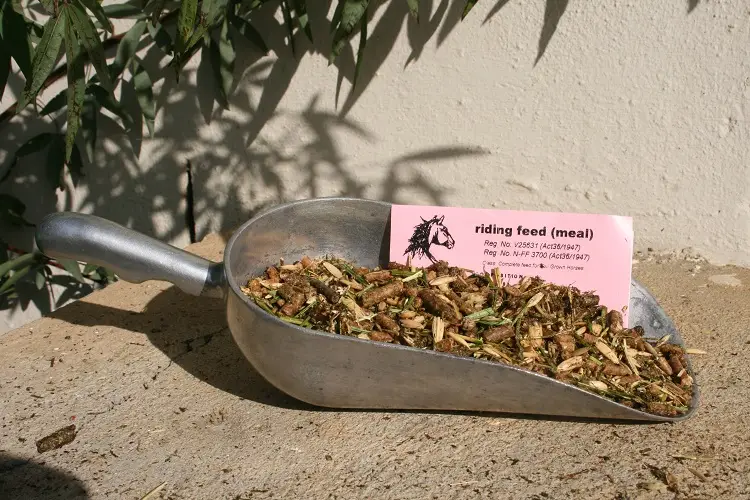
- Low protein, maize free, oat based Muesli
- Fully fortified with minerals, trace minerals and vitamins
- Oats contain the lowest starch and highest fibre of all cereals
- One of the safest energy sources used in horse feed
- General all-rounder feed ideal for livery yards & farm horses
Composition
| Component | Amount (g/kg) |
|---|---|
| Protein (min.) | 100 |
| Moisture (max.) | 120 |
| Fat (min.) | 40 |
| Fibre (max.) | 120 |
| Calcium (min.) | 9 |
| Phosphor (min.) | 5 |
| Ca : P | 1.8:1.0 to 2.0:1.0 |
Ingredient Statement
| Category | Ingredients |
|---|---|
| Energy, Fibre & Protein Sources | Oats, Barley, Wheaten Bran, Lucerne, Cold Pressed Canola Oil , Molasses |
| Minerals | Salt, Feed Lime, Mono-calcium Phosphate, Magnesium, Potassium |
| Vitamins | A, D, E, K, B1, B2, B6, B12, Folic Acid, Niacin, Pantothenic Acid, Biotin, Choline |
| Trace Minerals | Manganese, Zinc, Copper, Cobalt, Iodine, Selenium, Organic Selenium |
| Amino Acids | Lysine, Methionine |
| Additives | Mould Inhibitor |
Feeding Instructions
| Horse Type | Suggested Daily Amount |
|---|---|
| Ponies Light Work | 1-2kg |
| Ponies Medium Work | 2-3kg |
| Horses Light Work | 3-4kg |
| Horses Medium to Hard Work | 4–6kg |
- Feed according to body weight, condition, metabolism, work intensity and forage quality
- Feed concentrated feed with good quality hay and/or pastures
- Hay should be fed at a minimum of 1–2% of body mass
- Introduce any new concentrated feed gradually over a period of 10–14 days
- When reducing the work intensity or resting the pony or horse, concentrated feed should be reduced accordingly
- During periods of heavy sweating it is recommended to feed additional electrolytes
These feeding instructions are meant as a guideline; please contact the Vitaline Equine Nutritionist for more individualized feeding recommendations.
RSA: Reg. No. V25631 (Act / Wet 36/1947) / NAMIBIA: N-FF 3700
Need ration advice?
Email our nutrition team for tailored feeding plans, transitions, and herd programmes.